


Introduction
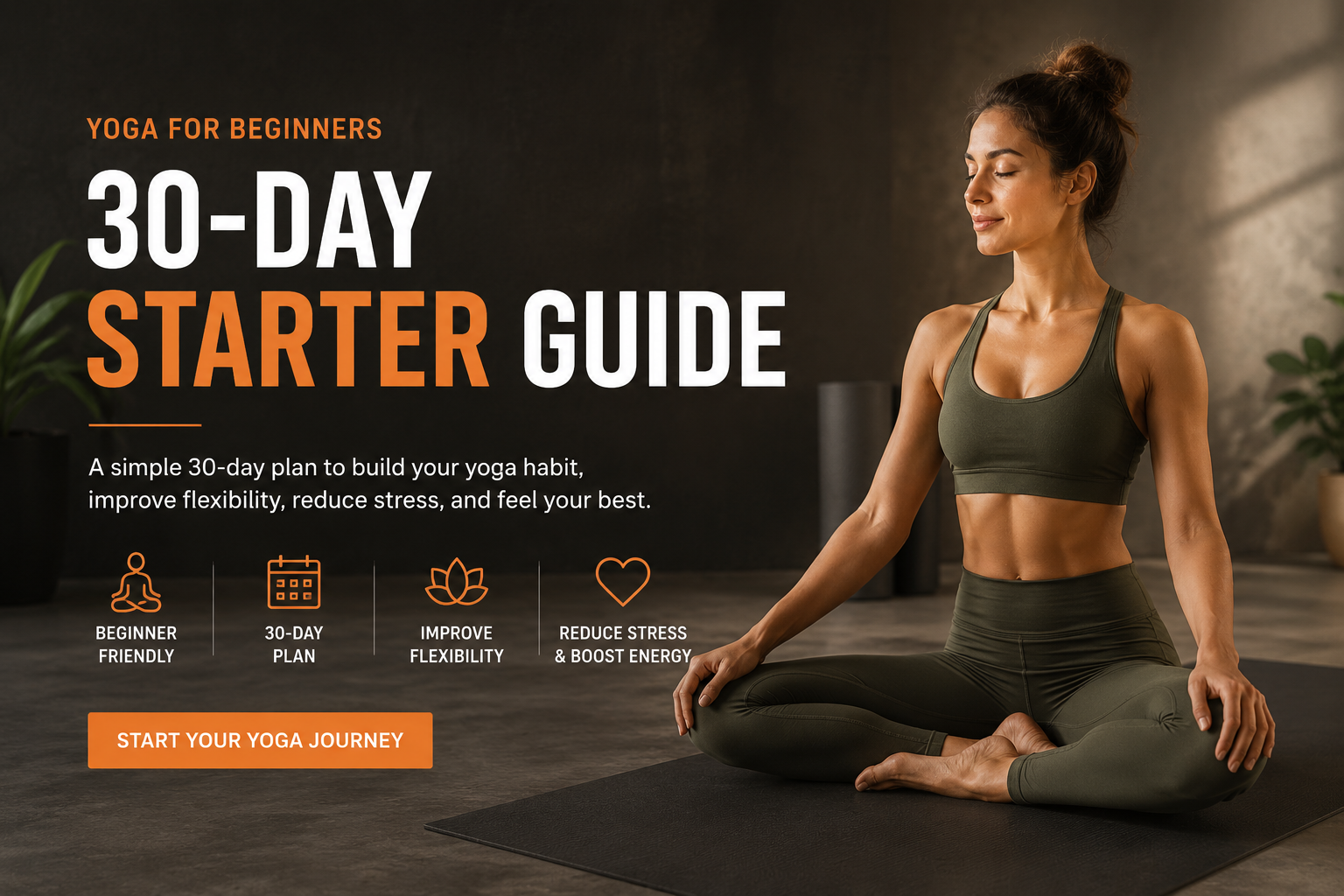
Starting yoga can feel intimidating, especially if you’ve never practiced before. You may think you need to be flexible, strong, or experienced to begin, but the truth is that yoga is for everyone. Whether you’re looking to improve flexibility, reduce stress, increase strength, or simply develop a healthier lifestyle, yoga provides an accessible and effective path toward better physical and mental well-being.
One of the biggest advantages of yoga is that you can start at any fitness level. With just a few minutes of daily practice, beginners can gradually build strength, improve balance, and develop a deeper connection between mind and body.
This 30-day beginner yoga guide is designed to help you build a sustainable yoga habit through simple, progressive weekly goals and routines.
Benefits of Yoga
Yoga offers a wide range of physical, mental, and emotional benefits that make it one of the most effective forms of exercise for beginners.
Improved Flexibility
Many people begin yoga because they want to become more flexible. Regular practice helps lengthen muscles and improve joint mobility, making everyday movements easier and more comfortable.
Increased Strength
Yoga uses bodyweight resistance to strengthen muscles throughout the body, particularly the core, legs, back, and shoulders.
Better Balance
Many yoga poses improve stability and coordination, helping you move with greater confidence both on and off the mat.
Reduced Stress
Yoga combines movement with breathing exercises, helping calm the nervous system and reduce stress levels.
Better Posture
Yoga strengthens postural muscles and increases body awareness, which can help reduce neck, shoulder, and back discomfort caused by poor posture.
Improved Sleep
Many practitioners report better sleep quality due to yoga’s relaxing and stress-reducing effects.
Enhanced Mental Focus
Mindful breathing and movement improve concentration, self-awareness, and emotional well-being.
What You Need Before Starting
One of the best things about yoga is that you need very little equipment.
Yoga Mat
A quality yoga mat provides comfort, stability, and grip during your practice.
Look for:
- Non-slip surface
- Comfortable cushioning
- Durable material
- Easy maintenance
Comfortable Clothing
Choose clothing that allows free movement.
Examples include:
- Yoga leggings
- Athletic shorts
- Stretchable tops
- Breathable fabrics
Water Bottle
Stay hydrated before and after your yoga sessions.
Quiet Practice Space
You don’t need a large room. A small, comfortable space where you can move freely is enough.
Positive Mindset
Remember that yoga is not about perfection. Focus on progress rather than comparing yourself to others.
Week 1: Learning Basic Poses
The goal of Week 1 is to become familiar with basic yoga movements and breathing techniques.
Daily Practice Time
10–15 minutes
Focus Areas
- Proper breathing
- Body awareness
- Gentle stretching
Beginner Poses
Mountain Pose (Tadasana)
Improves posture and balance.
Child’s Pose (Balasana)
Promotes relaxation and flexibility.
Cat-Cow Pose
Improves spinal mobility.
Downward Dog
Stretches the entire body.
Cobra Pose
Strengthens the back and opens the chest.
Week 1 Goal
Develop comfort with basic poses and establish a daily practice habit.
Week 2: Building Consistency
The second week focuses on creating consistency and increasing confidence.
Daily Practice Time
15–20 minutes
Focus Areas
- Smooth transitions
- Breathing awareness
- Longer pose holds
Add These Poses
Warrior I
Builds lower-body strength and stability.
Warrior II
Improves endurance and balance.
Tree Pose
Develops concentration and coordination.
Bridge Pose
Strengthens glutes and core muscles.
Week 2 Goal
Practice daily and improve familiarity with common yoga postures.
Week 3: Improving Balance
Balance is a key component of yoga and helps improve overall body control.
Daily Practice Time
20–25 minutes
Focus Areas
- Core engagement
- Stability
- Mind-body connection
Balance-Building Poses
Tree Pose
Challenges balance and focus.
Warrior III (Modified)
Improves coordination and stability.
Chair Pose
Strengthens the legs and core.
Eagle Arms
Enhances shoulder mobility and concentration.
Breathing Practice
Spend 5 minutes focusing on slow, controlled breathing at the end of each session.
Week 3 Goal
Improve balance, stability, and confidence in movement.
Week 4: Full Yoga Flow
The final week combines everything you’ve learned into a complete beginner yoga flow.
Daily Practice Time
25–30 minutes
Sample Yoga Flow
- Mountain Pose
- Forward Fold
- Cat-Cow Pose
- Downward Dog
- Warrior I
- Warrior II
- Tree Pose
- Bridge Pose
- Seated Forward Fold
- Child’s Pose
- Corpse Pose (Savasana)
Benefits of Full Flows
- Improved endurance
- Better flexibility
- Enhanced coordination
- Greater body awareness
Week 4 Goal
Complete a full yoga session comfortably and confidently.
Beginner Yoga Schedule
Monday
Basic Stretching & Breathing
Tuesday
Standing Poses
Wednesday
Flexibility Practice
Thursday
Balance Training
Friday
Strength-Focused Yoga
Saturday
Full Yoga Flow
Sunday
Recovery Yoga & Relaxation
This schedule provides variety while allowing adequate recovery.
Common Challenges
Many beginners experience similar obstacles when starting yoga.
Lack of Flexibility
One of the most common misconceptions is that you must be flexible before starting yoga.
The reality is:
Yoga helps you become flexible.
Flexibility develops gradually through consistent practice.
Difficulty Balancing
Balance takes time to improve.
Tips:
- Focus on a fixed point
- Engage your core
- Practice regularly
Feeling Self-Conscious
Remember that everyone starts somewhere.
Focus on:
- Your own progress
- Your breathing
- Your personal goals
Inconsistent Practice
Many beginners start enthusiastically but struggle to maintain consistency.
Solutions:
- Schedule yoga sessions
- Start with short practices
- Track your progress
Even 10 minutes daily can produce meaningful results.
Expecting Immediate Results
Yoga is a long-term practice.
While some benefits such as stress reduction can occur quickly, improvements in flexibility, strength, and balance require patience and consistency.
Conclusion
Starting yoga is one of the best investments you can make in your physical and mental health. Through regular practice, yoga can improve flexibility, strength, balance, posture, stress management, and overall well-being.
This 30-day beginner yoga guide provides a simple roadmap for building a sustainable yoga habit. By focusing on basic poses, consistency, balance, and full yoga flows, you’ll develop a strong foundation that supports long-term progress.
Remember that yoga is not about achieving perfect poses—it’s about showing up, practicing consistently, and enjoying the journey. Take it one day at a time, listen to your body, and celebrate every small improvement along the way.
Your yoga journey starts with a single pose. Roll out your mat and begin today.



Add comment